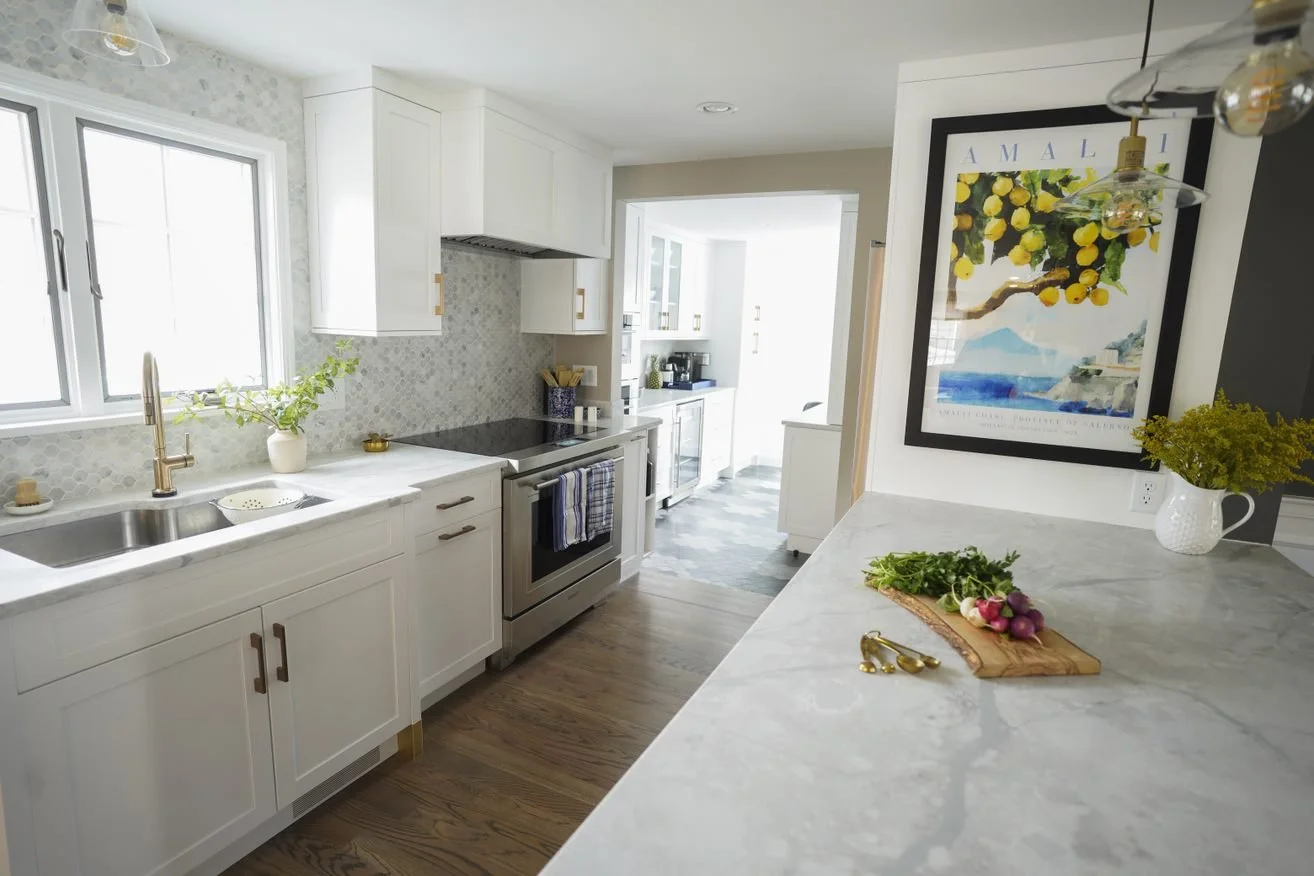
Galley Kitchen Design: How to Make Narrow Spaces Feel Big
Think galley kitchens can’t compete? Smart design proves otherwise. A well-planned galley delivers serious efficiency and style, often outshining kitchens that rely on size in lieu of function.
At KitchenVisions, we’ve transformed many tight Boston and Back Bay kitchens into bright, functional layouts that feel intentional and surprisingly spacious. Square footage can be at a premium in urban settings, but whether in the city or the suburbs, we rise to the challenge.
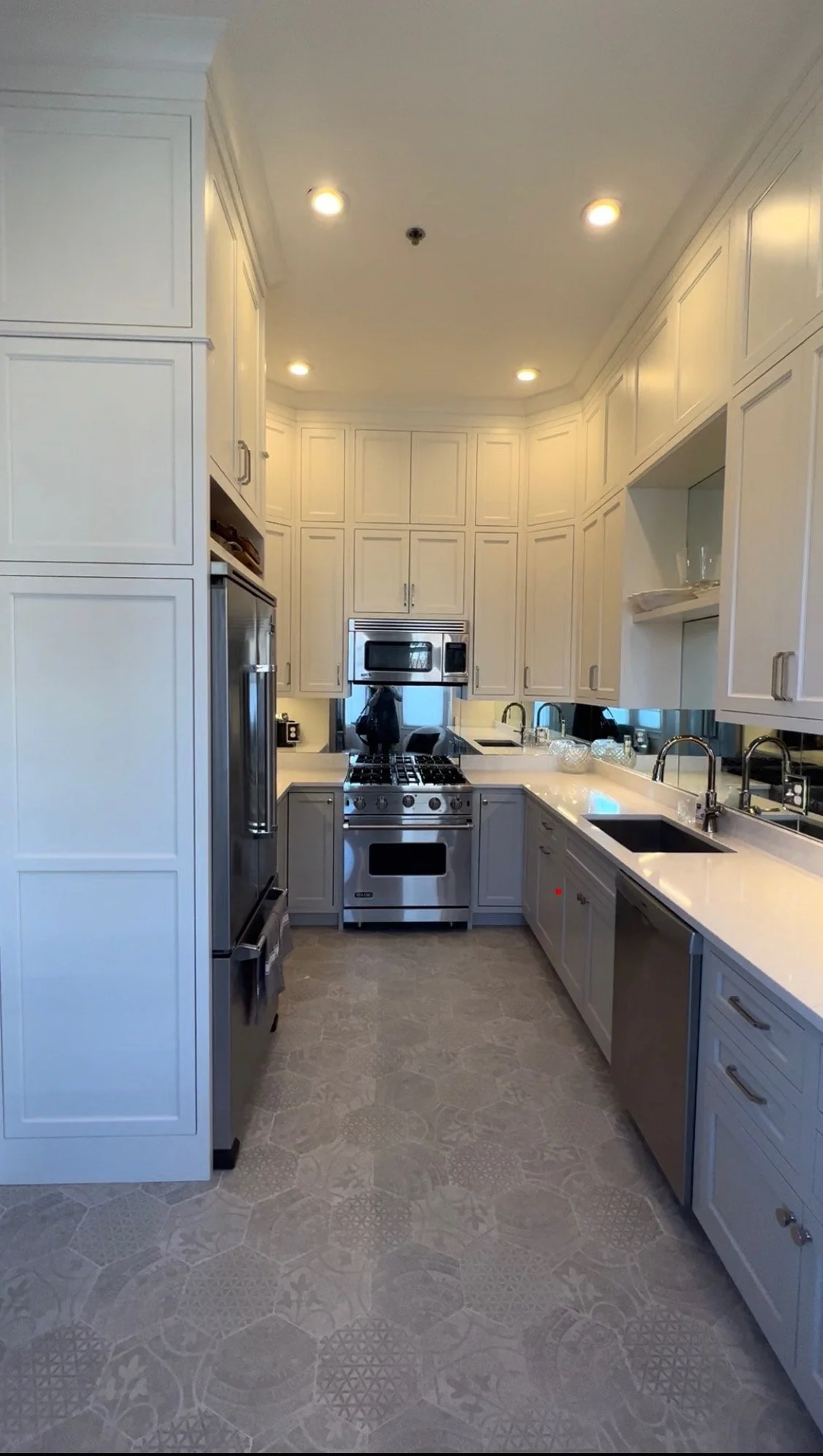
A reference to narrow kitchens on ships, the galley kitchen is defined as a slender space with cabinets and appliances facing one another, with three to five feet of width between the two sides.
Start With the Layout: Flow Comes First
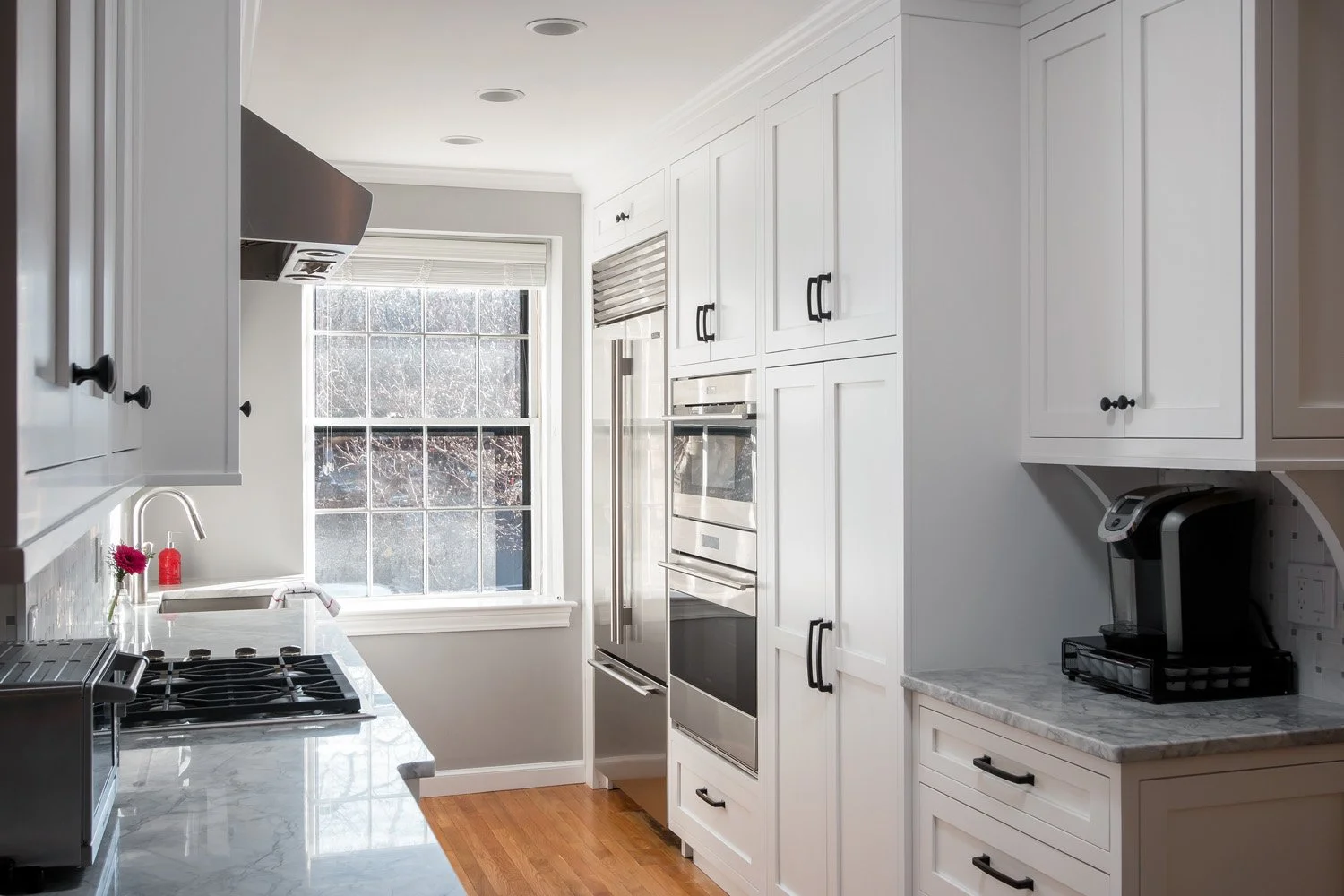
The key to a successful galley kitchen renovation is understanding how people use the space. Unlike open kitchens with large islands, galley kitchens rely on rhythm and sequencing. We must consider how the refrigerator, prep zone, sink, and cooking area relate to one another and how homeowners will move between them; some guiding principles of interior architecture.
One of the best techniques for optimizing flow in a galley kitchen involves wall-staggering appliances. Instead of lining everything up in a row like dominoes, staggering ensures two people can work together without bumping elbows. It also creates moments of breathing room, helping the kitchen feel less like a tunnel and more like a thoughtful passageway.
For extremely narrow galleys, a one-wall kitchen is sometimes the best choice, keeping everything on a single side to maximize walkway space.
Storage Where You Least Expect It
When every inch matters, the walls themselves hold enormous potential. Galley kitchens benefit from turning wall cavities into “found space.” Between the studs, we can create shallow cabinets for spice racks, glassware, or small pantry items.
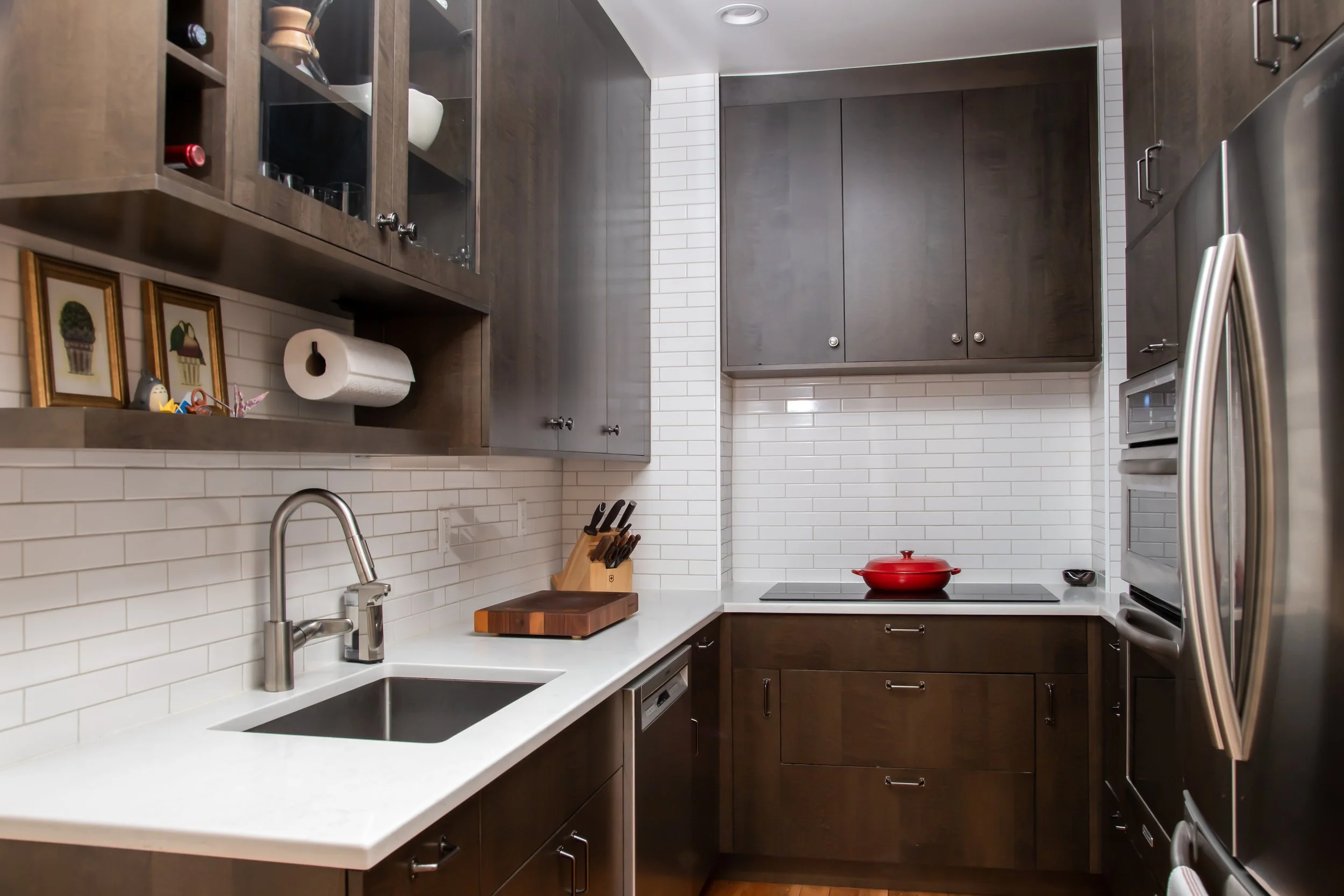
Slight pantries are one of the greatest gifts to a galley layout. At 12 to 15 inches deep, they store a surprising amount while keeping circulation free. These can be integrated as full-height cabinetry or flanking a refrigerator.
In our designs, we will often frame out a counter-depth refrigerator between studs, allowing a true 36” space for the appliance without intruding into the walkway; this trick visually cleans up the room and keeps lines smooth and uninterrupted.
Lighting and Opening the Walls
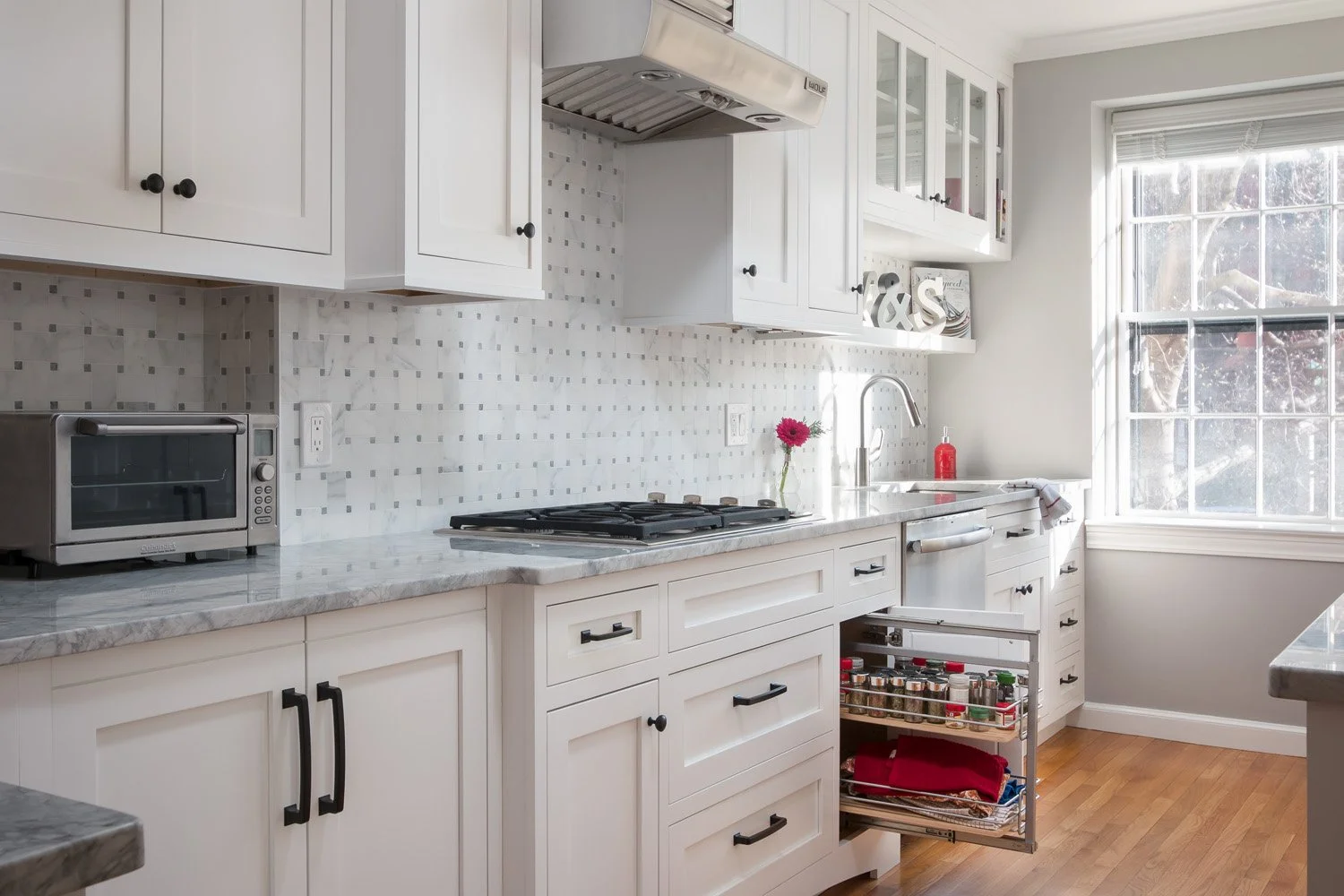
Small kitchens crave light and reflectivity, so using glossy or semi-gloss cabinetry, mirrored backsplashes, light quartz countertops, and even polished nickel plumbing can bounce light throughout the space, making it feel bigger.
If the floor plan allows, a half-wall or pass-through to the dining room instantly expands the galley’s visual volume. Even a few additional inches can dramatically change the experience.
Islands & Peninsulas
Most galley kitchens simply don’t have the width for a full island, but that doesn’t mean you’re out of options. Peninsulas often serve as a perfect alternative, providing extra prep space and a spot to sit without disrupting the room's natural flow.
Even the smallest addition can make the space feel more functional. Sometimes a simple two-seat “perching station” does the trick, offering a cozy place to chat with the cook or help with meal prep. The real secret is knowing what the room can handle without feeling crowded.
Don’t Let the Kitchen Feel Like a Tunnel
Galley kitchens work best when the layout guides the eye to a focal point. Without that visual landing spot, the room can start to feel like a tunnel. We love incorporating something special at the far end of the galley, like a small corkboard for family notes, a sleek magnetic memo panel, a stylish floating shelf, or even a slim cabinet.
These finishing touches do more than decorate; they “pause” the room in the best way. That sense of grounding makes the kitchen feel complete, and even the narrowest kitchen feels bigger when your eye has a place to settle.
Thinking about a galley kitchen remodel? As one of Boston’s premier kitchen designers, KitchenVisions can help you turn tight quarters into a layout that feels spacious, efficient, and uniquely yours.