Upgrade Your Cooking Zone
Kitchen designers have been rethinking functionality in renovations. Like a professional restaurant kitchen, the residential kitchen “triangle” has become separate zones for prep, cooking, clean-up and gathering. At the heart of functionality in the kitchen is, of course, cooking: baking, roasting, steaming, simmering, boiling, and frying are just a few methods of getting food onto the table. So what appliances and equipment do home cooks need to do that?
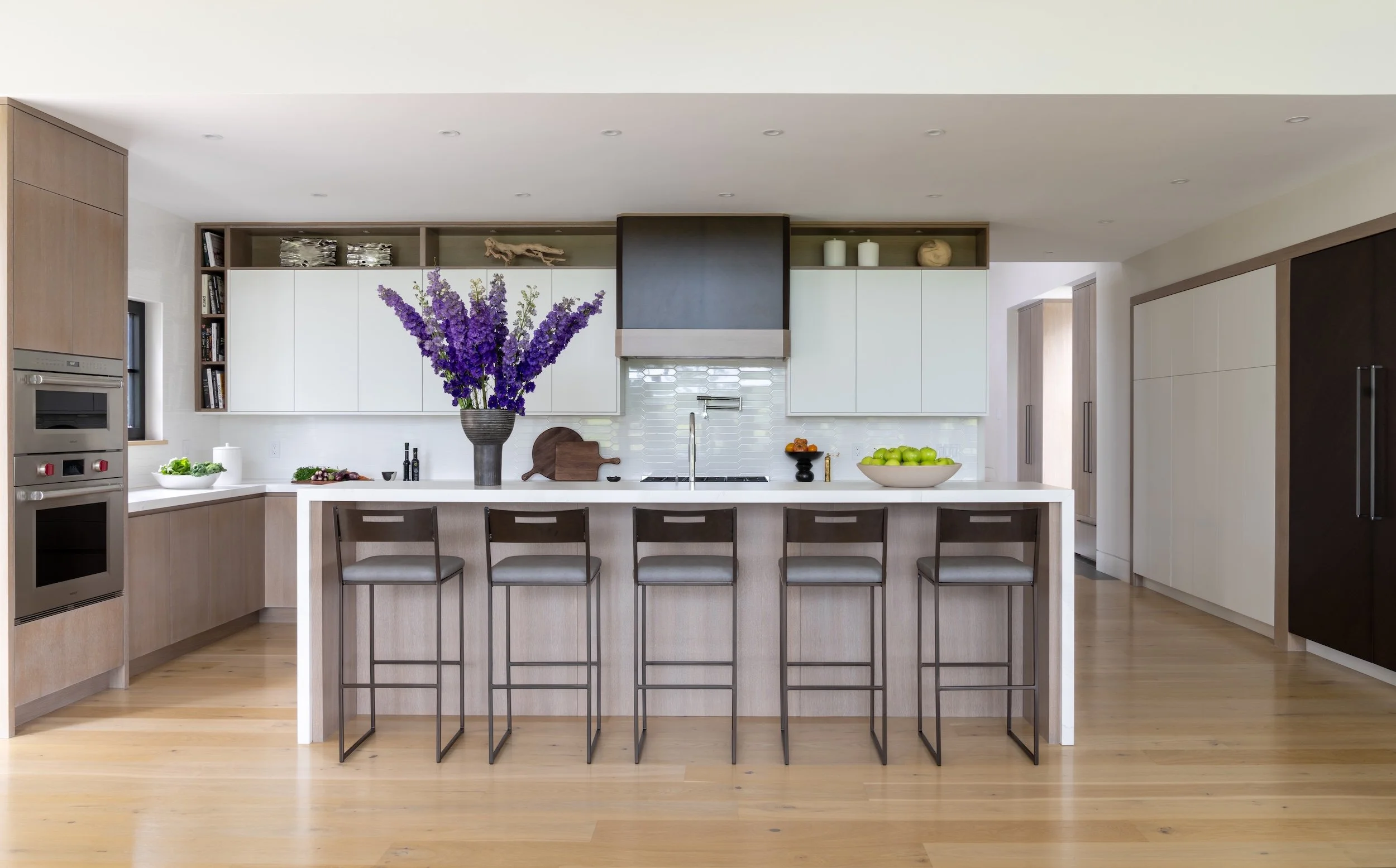
Modern Prairie Ranch kitchen with double ovens and separate cooktop with pot-filler faucet in Sherborn
Range vs. Rangetop vs. Cooktop
Before designing the cooking area, we start by helping our clients understand exactly what type of appliance they’re designing around. Similar to our helpful and popular piece on induction vs. gas, many homeowners aren’t familiar with the differences between ranges, rangetops, and cooktops — and that choice plays a major role in shaping both the look and function of the space.
Keeping it simple:
A range combines the burners and oven into a single unit and often creates a strong, traditional focal point.
A rangetop offers the look and performance of a professional range while allowing ovens to be placed elsewhere, providing greater flexibility in cabinetry design and layout.
A cooktop tends to be more minimal, typically paired with wall ovens and often calling for a slightly softer visual approach.
By understanding these differences, it becomes much easier for us to guide decisions about hood size, cabinetry layout, and just how dramatic the cooking zone should feel. We’ve been seeing many clients choose a beautiful La CornueFe range. Another tried-and-true range is from Wolf with many sizes and model choices. We often recommend that clients visit one of the Clarke showrooms or Yale Appliance to see what’s available before purchasing their cooking appliances.
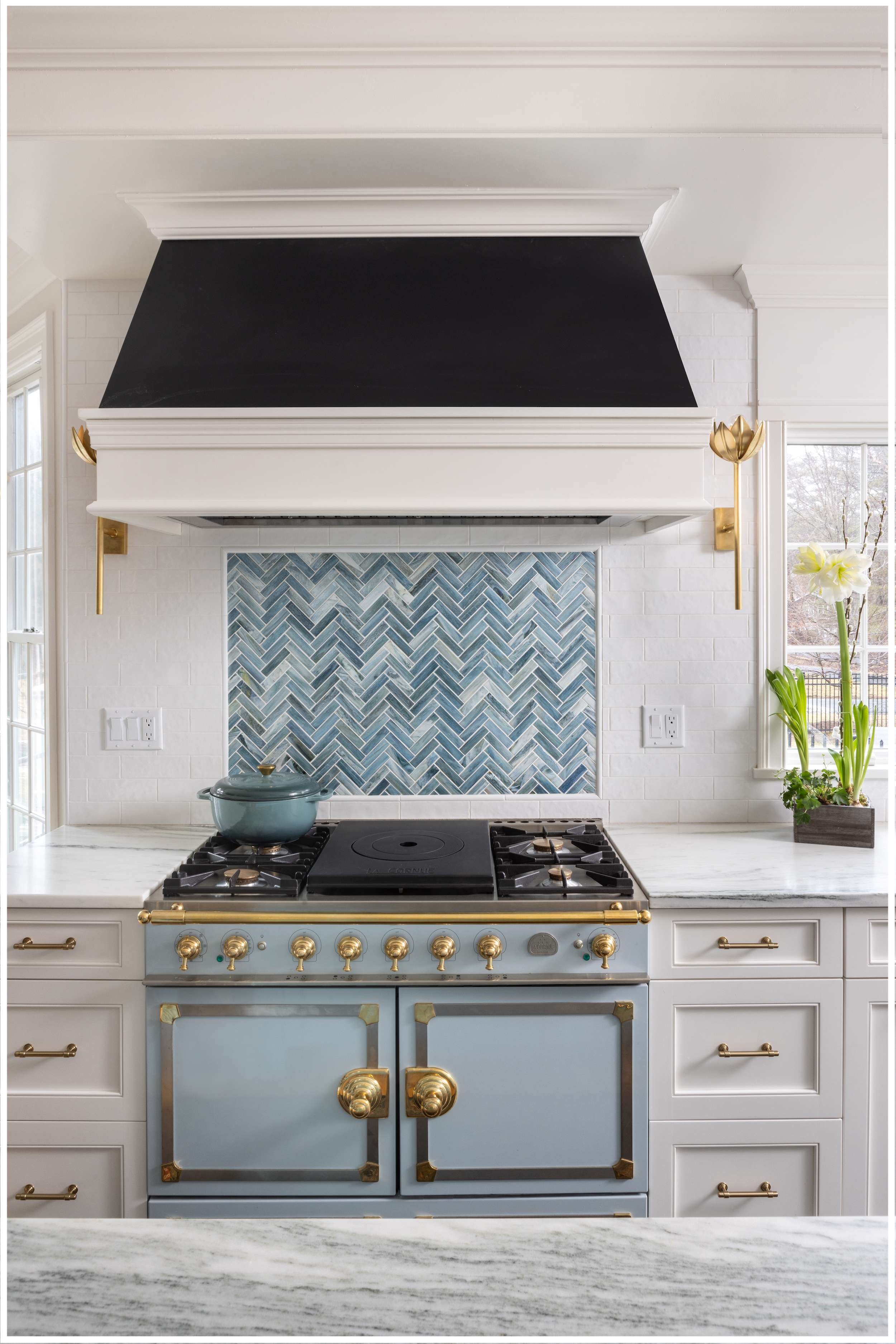
La CornuFe range in a Sudbury kitchen remodel
Ovens
Whether you want wall ovens in addition to a range, or to complement the cooktop, again there are many choices:
Conventional ovens
Speed ovens
Steam ovens
Microwave - we like microwave drawers in cabinetry
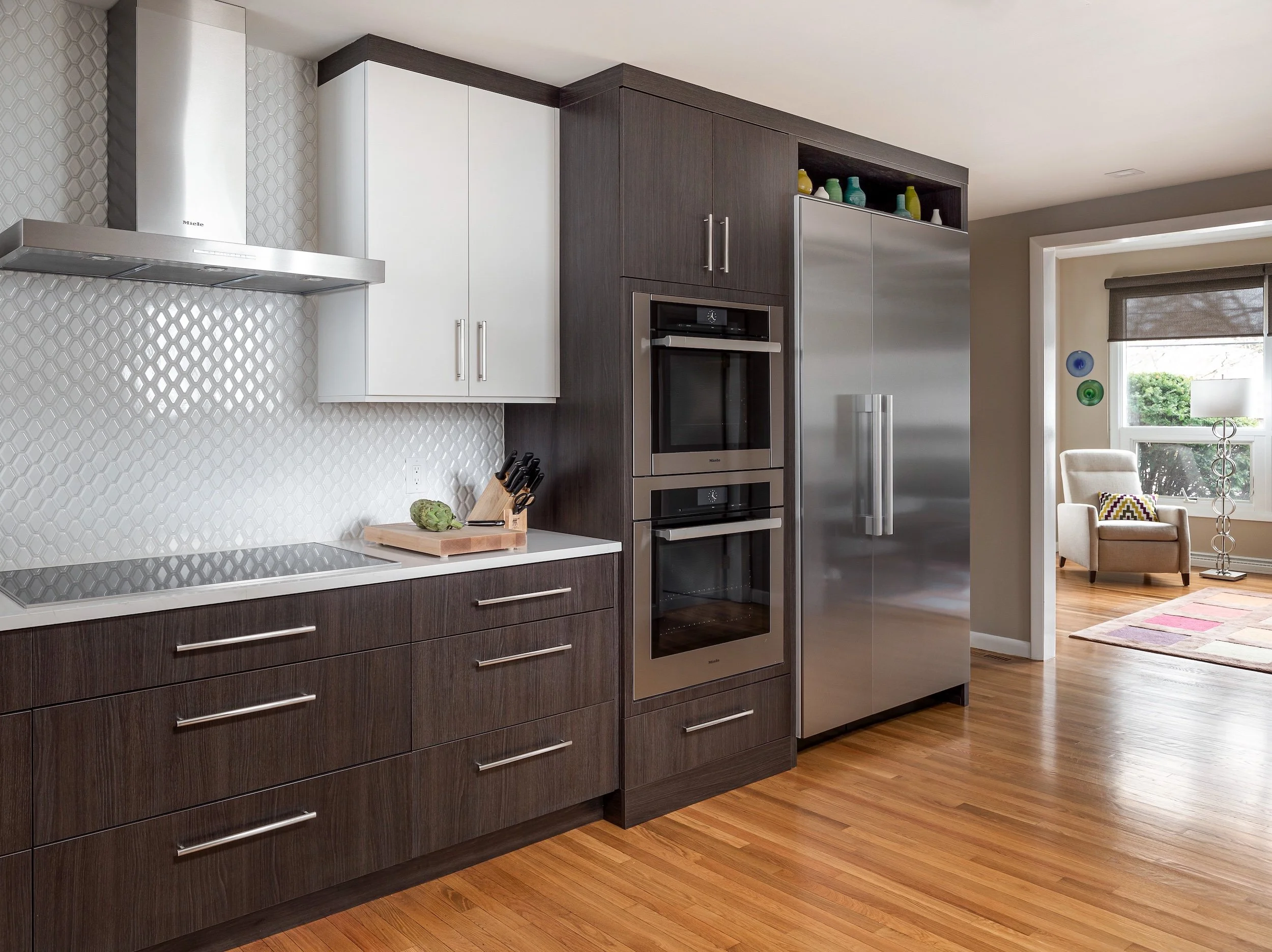
Mid-century Modern kitchen in Newton with induction cooktop and double ovens
Hoods: The Natural Focal Point
One of the most effective ways we elevate the cooking zone is with a beautifully designed, unique hood that draws the eye and establishes the range as a destination within the kitchen.
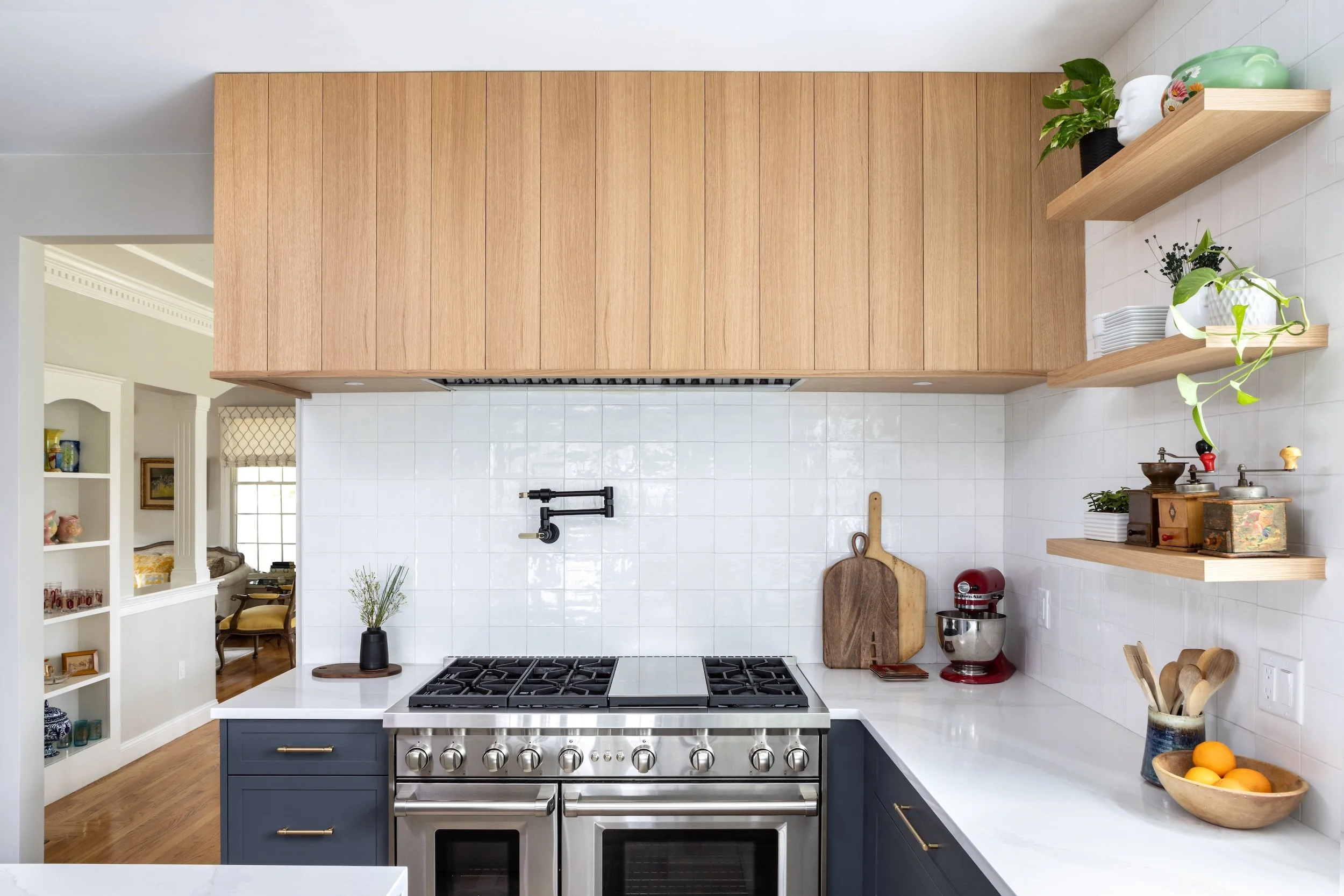
A great example is the white oak wood hood featured in our Kitchen remodel in Lexington. The warmth of the wood created an immediate focal point, grounding the kitchen and adding texture without feeling heavy. Rather than blending into the cabinetry, the hood became a defining feature that set the tone for the entire space.
We design around a variety of hood styles, depending on the home and the homeowner's preferences. These include warm, natural wood hoods, island hoods for ranges positioned in the center of the kitchen, classic chimney hoods, and minimalist Robam hoods for modern spaces. Each brings a different personality, but all help establish the range as the centerpiece.
Framing the Cooking Zone
Once the appliances are selected, the surrounding design elements help complete the picture; this is where the cooking zone truly comes together. Cabinetry, backsplashes, and finishes all work together to create a space that feels intentional rather than purely functional.
We often begin with cabinetry that gently frames the range, giving it presence without overwhelming the room. A contrasting backsplash behind the hood can further define the space, whether through subtle texture, tile, or stone. In some kitchens, we incorporate custom millwork or paneling behind the range to add an architectural layer that makes the cooking area feel thoughtfully designed.
Warm metals such as copper and brass in the kitchen are particularly effective when paired with statement ranges. These finishes add richness and warmth, especially alongside deeper cabinetry colors like navy or warm wood tones.
Not every kitchen needs a dramatic cooking zone, but when clients invest in a beautiful range, it often makes sense to highlight it. Designing around the range helps create a kitchen that feels beautifully cohesive. The right design approach transforms the cooking zone from a utility area into the heart of the kitchen.
As premier kitchen designers in Boston, we help homeowners select the cooking appliances that work best in their space. We you on whether a range should take center stage and how to design around it so the entire kitchen works beautifully together.
Contact the team today.